How Roller Burnishing Tools Work on Flat Faces, Radii, and Contours
Taceana Zelaya2026-04-14T08:46:30-05:00From flat faces to contours, roller burnishing tools improve finish, accuracy, and durability. Learn how to apply burnishing to your part.
From flat faces to contours, roller burnishing tools improve finish, accuracy, and durability. Learn how to apply burnishing to your part.
Discover the key maintenance practices that protect mechanical joining tools, prevent premature wear, and keep joint quality consistent over time.
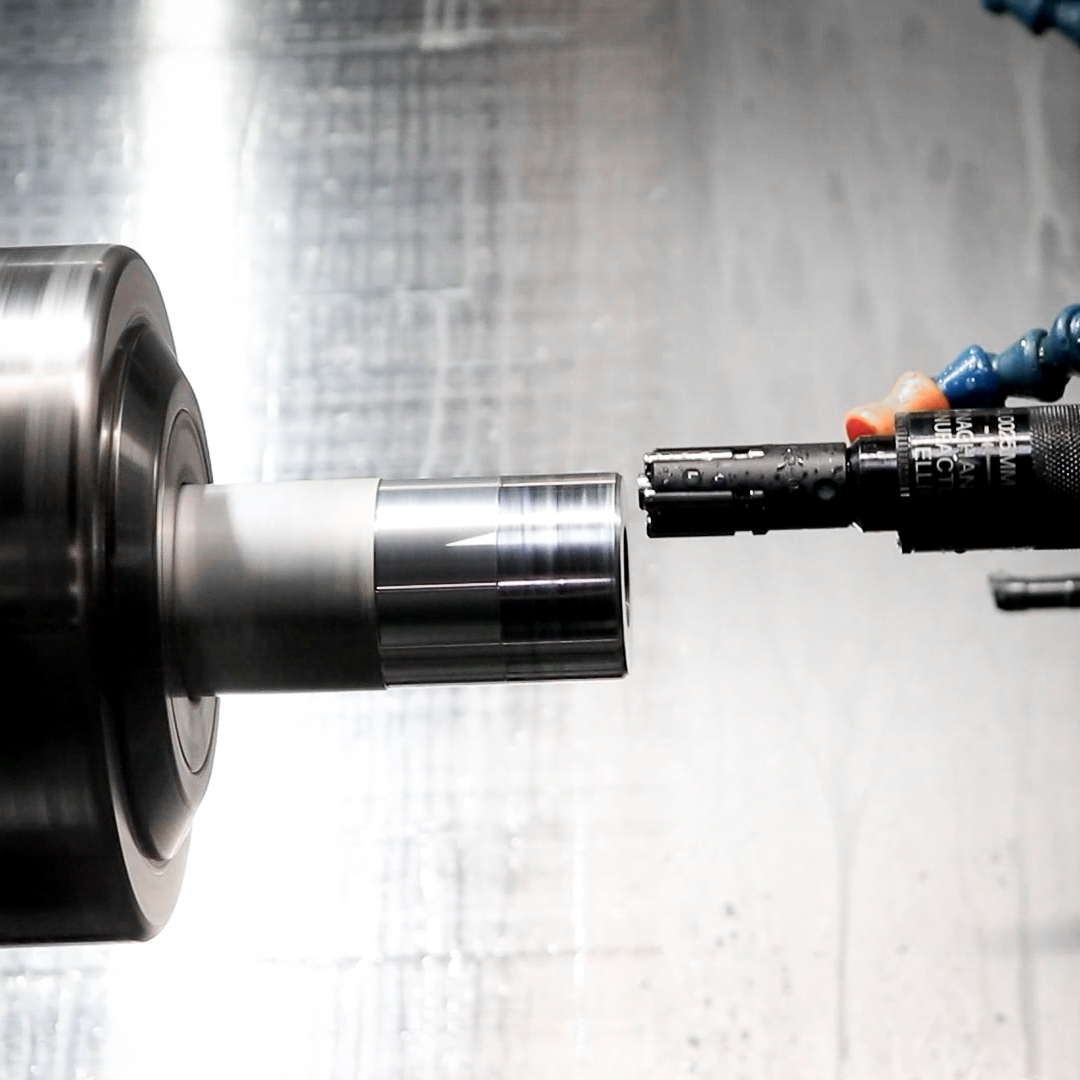
The burnishing process is a precision cold working method that significantly improves the surface integrity of a material by imparting compressive residual stress. Unlike grinding or reaming, burnishing uses pressure from a hardened roller or ball to plastically deform the surface layer without removing material.
In the demanding world of data centers, where uptime and efficiency are paramount, every component of the cooling infrastructure must perform flawlessly. Heat exchangers and air coolers are mission-critical elements in managing the intense thermal load generated by server racks. Ensuring the longevity and integrity of these units, especially in the areas of mechanical joint integrity, requires meticulous attention to detail. One critical process that is emerging as a trend is the precise finishing of the tube sheet hole IDs.
Burnishing stands out as a highly effective finishing method offering significant advantages over traditional abrasive techniques like grinding, honing, and polishing, particularly when focusing on reducing scrap and energy use. This cold-working process utilizes mechanical pressure to displace and smooth a surface, leading to a more efficient, consistent, and sustainable manufacturing operation.
Internal Recessing Units (IRUs) are essential for performing precision cuts in deep bores, a common requirement in hydraulic valve manufacturing. Unlike other cutting tools that risk deflection due to a long reach, IRUs use a piloted cutter design that maintains position in the part, ensuring consistent and precise cuts. The design of these cutter blades is crucial to their performance, with key considerations including material, bore size, and the specifics of the machining process.
Deburring is the process of removing burrs from a part. Burrs are small, unwanted pieces of material left behind after machining, drilling, milling, or cutting. These can be sharp, ragged, or thin slivers of material that stick out from the workpiece. While they may seem insignificant, ignoring them can lead to major issues.
In the landscape of modern machining, efficiency, cost-effectiveness, and quality are paramount. While traditional finishing methods like grinding and polishing have long been the standard, they often introduce extra operations, increase cycle times set up time, and add to overall costs. A new hero in the machining process has emerged: burnishing. This process, which can be done in-machine, offers significant advantages in cost, time, and quality, making it a valuable addition to any machine shop's toolkit.
When it comes to achieving a smooth, work-hardened finish on the exterior of a part, manufacturers have several tooling options. Two prominent choices are the OD carbide roll burnishing tool and the OD multi-roll tool, each with distinct advantages and ideal applications. Understanding these differences is key to optimizing your process for efficiency, precision, and cost-effectiveness.
Burnishing stands as a highly effective finishing method for a wide range of ductile materials, enhancing surface finish, hardness, and fatigue life. However, the inherent properties of the workpiece material play a significant role in the burnishing outcome. When venturing into the realm of exotic materials, particularly those prevalent in demanding sectors like medical devices, aerospace, and specialized industries, specific considerations become paramount. Titanium, specialized Stainless Steels, and Inconel are among the most commonly encountered exotic alloys, each presenting unique challenges and opportunities for the burnishing process.